AudioCodes
con4PAS has become the AudioCodes Channel Partner with the certification:
Registered VAR / Systems Integrator


con4PAS has become the AudioCodes Channel Partner with the certification:
Registered VAR / Systems Integrator

Transformation is no longer an occasional enterprise event. According to a 2026 Forrester thought leadership paper commissioned by SAP, large organizations are already running multiple transformation initiatives every year, increasing budgets, and pushing harder on data, customer experience, and AI. But the same research shows that ambition still runs ahead of execution. Strategies remain fragmented, governance is often weak, and data problems continue to slow delivery. The strongest message from the study is simple: transformation only scales when companies turn it into a repeatable capability that connects strategy, process, technology, data, and people.
Transformation is now constant, but most companies still treat it like a project
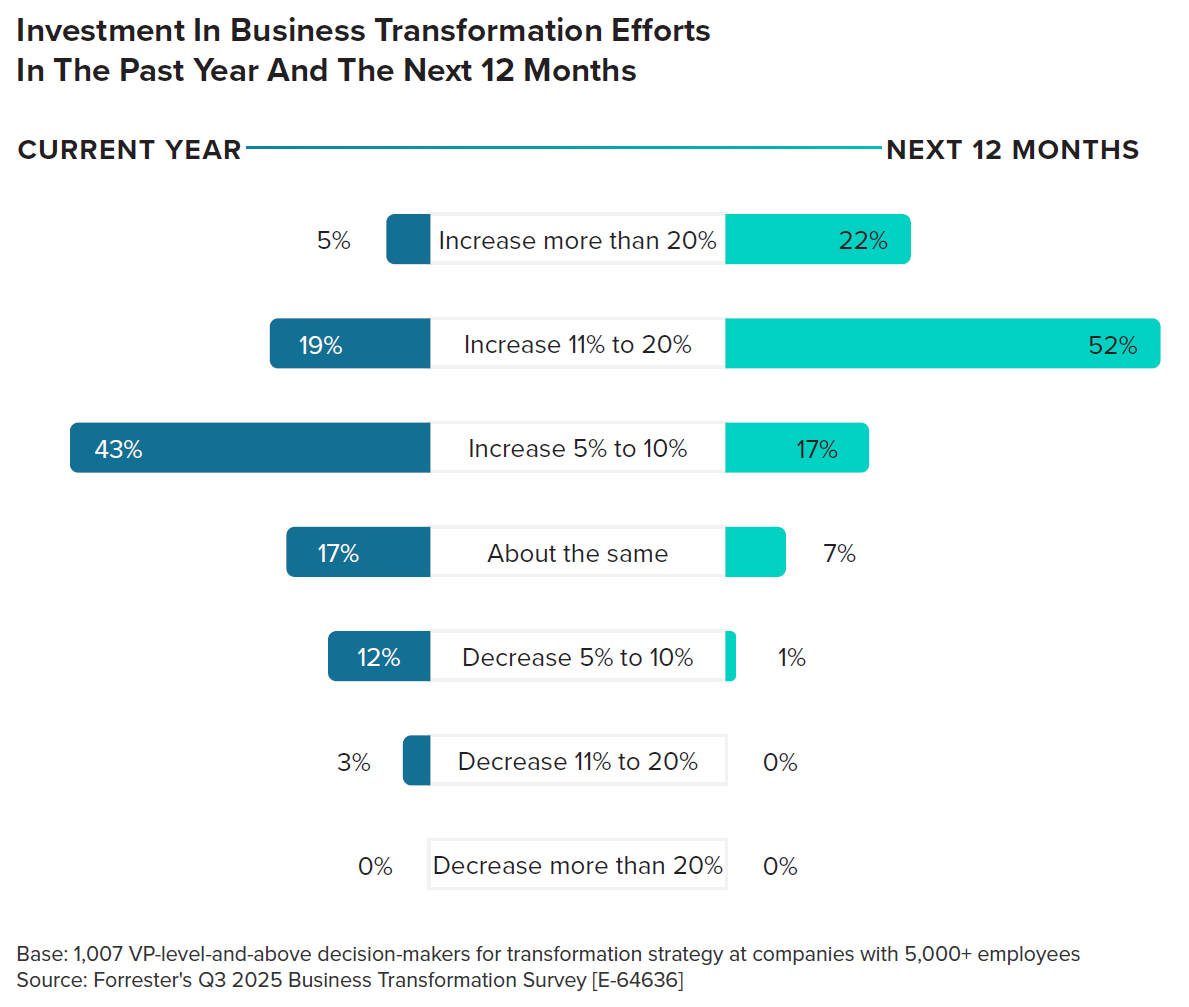
The report makes clear that transformation has moved from episodic to ongoing. Nearly three-quarters of surveyed organizations, 72%, run four or more enterprise-wide transformation initiatives every year, while 18% already manage between six and nine, and another 16% run ten or more. At the same time, investment levels are still rising. More than half of organizations expect their transformation spending to grow by 11% to 20% over the next 12 months, and another 22% plan increases above 20%. Yet higher activity and bigger budgets have not automatically created better coordination. Many organizations still approach transformation as separate initiatives tied to individual departments, functions, or technology upgrades rather than as a shared enterprise capability.
The priorities are clear: data first, customer experience close behind
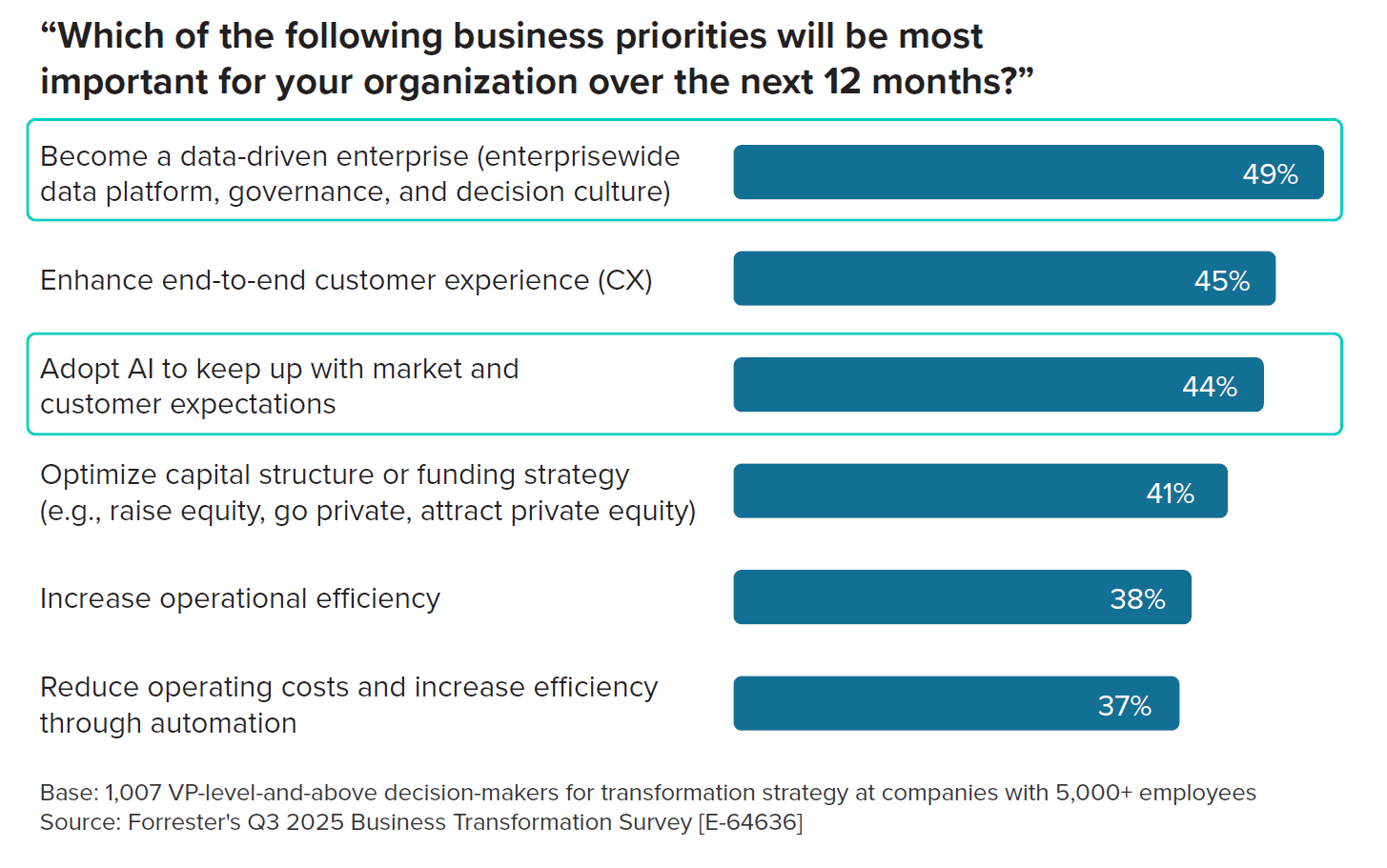
The next wave of transformation priorities shows where organizations believe value will come from. The most frequently selected priority for the next 12 months is becoming a data-driven enterprise, chosen by 49% of respondents. Enhancing end-to-end customer experience follows at 45%, just ahead of adopting AI to keep up with market and customer expectations at 44%. These priorities are not isolated themes. Together they point to a broader shift toward better visibility, faster decision-making, and more connected operations. The implication is important: companies will struggle to deliver real transformation value if they pursue AI or customer-facing change without a strong data foundation underneath.
Confidence is high, but the operating model is still immature
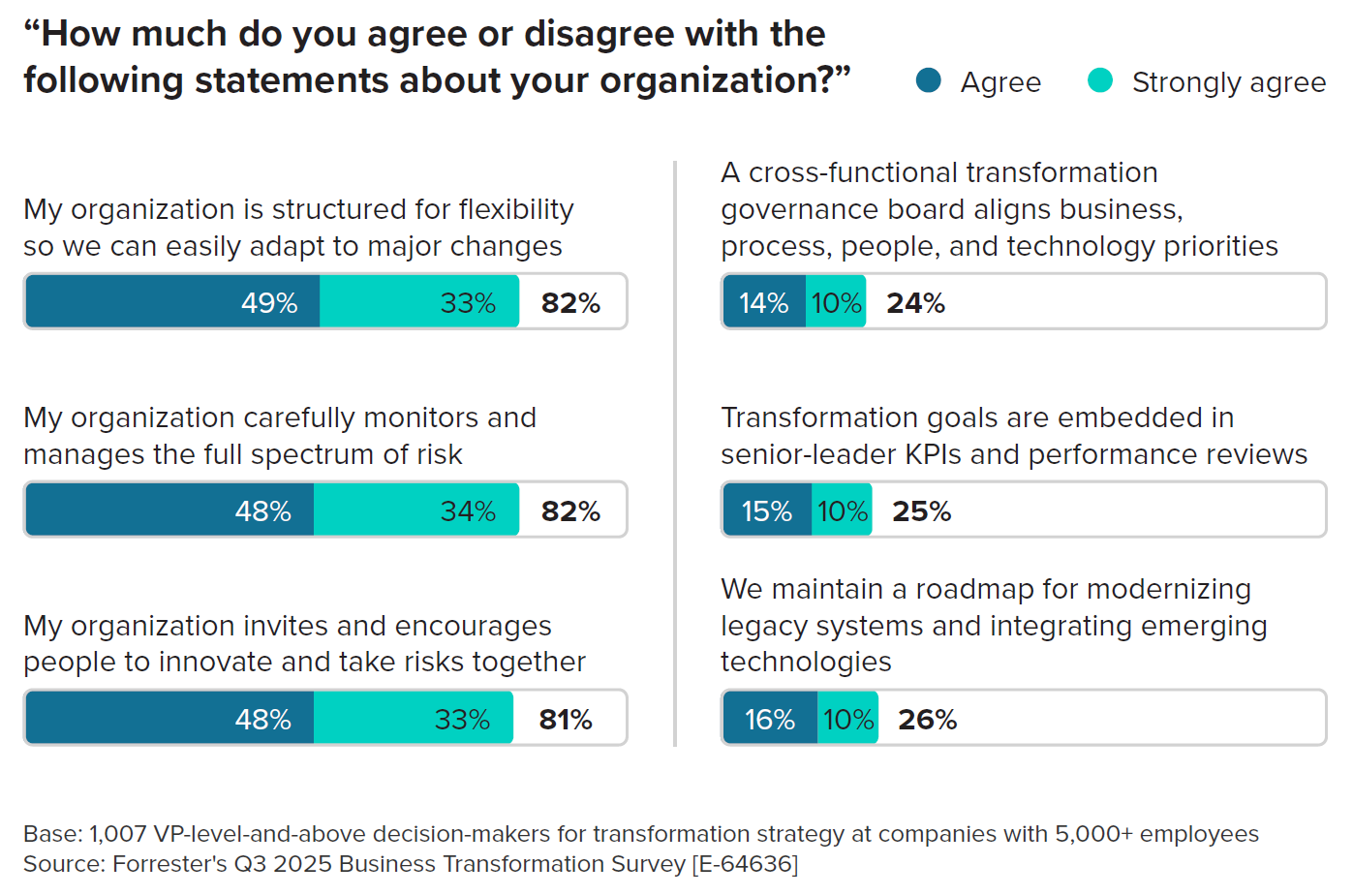
One of the most interesting findings in the study is the gap between confidence and execution. More than 80% of respondents say their organizations encourage innovation, manage risk carefully, and are structured for flexibility. Many also believe they have strong visibility into operations and that their enterprise architecture teams can support major strategic shifts. But once the research moves from mindset to mechanisms, the picture changes. Only 24% say they have a cross-functional transformation governance board that aligns business, process, people, and technology priorities. Just 25% embed transformation goals into senior leader KPIs, and only 26% say they maintain a roadmap for modernizing legacy systems while integrating emerging technologies. In other words, many firms believe they are ready for transformation, but far fewer have built the structures needed to deliver it consistently.
Most companies are still climbing the maturity curve
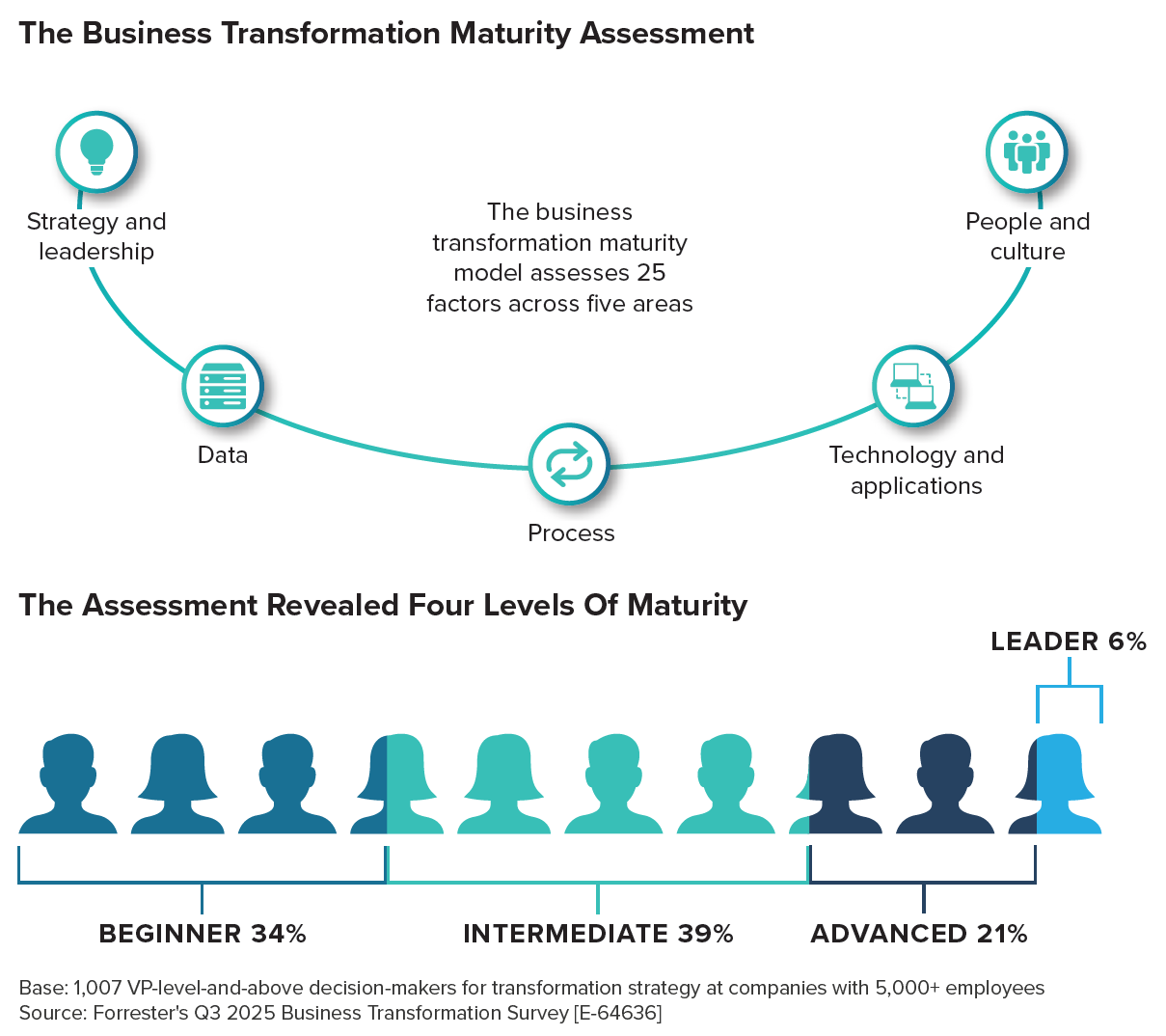
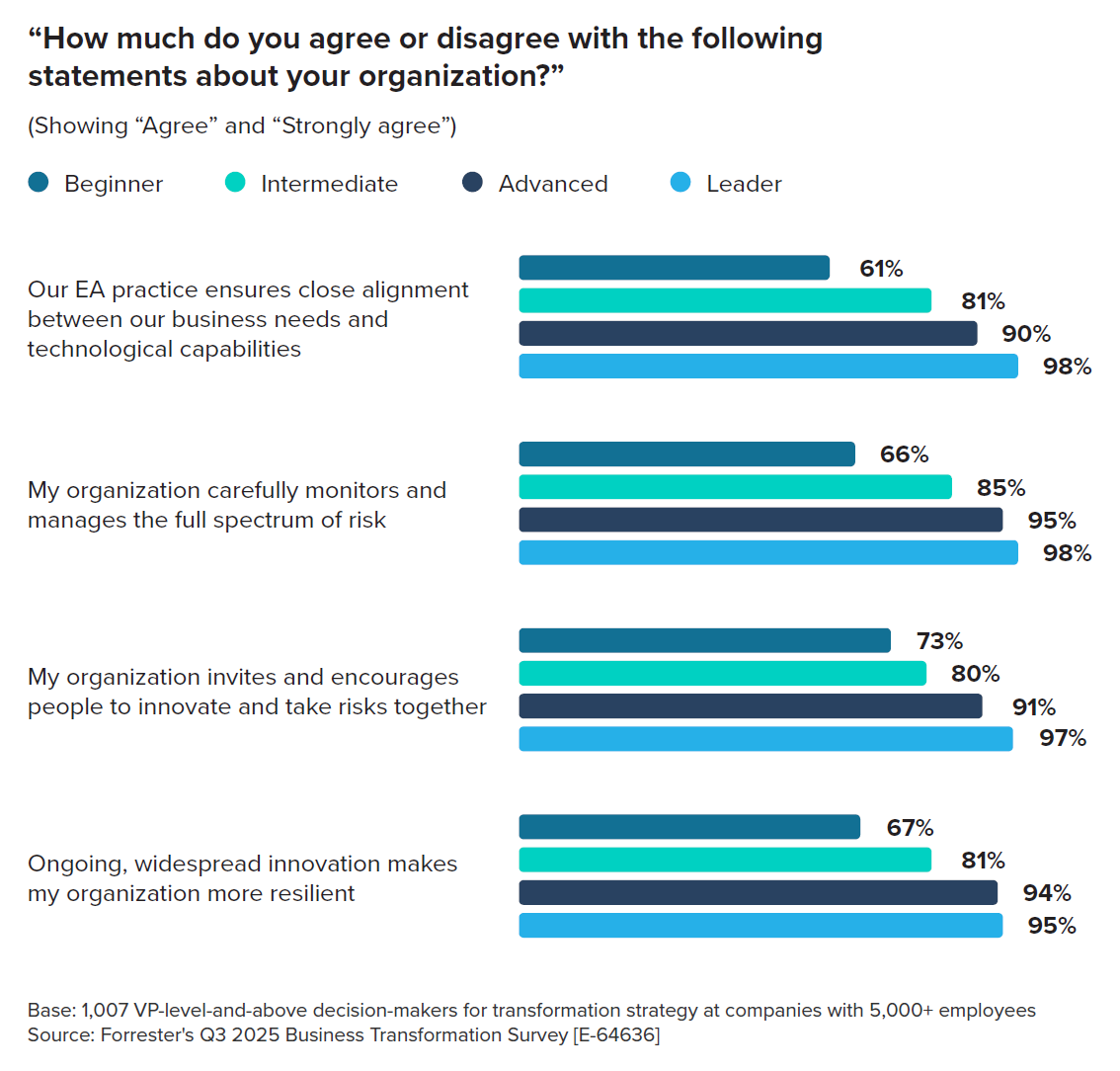
Forrester’s maturity assessment breaks organizations into four groups: beginners, intermediates, advanced firms, and leaders. The distribution is revealing. Only 6% qualify as leaders, while 34% remain at the beginner level and 39% sit in the intermediate group. Another 21% are advanced, which means they have addressed many technical and process issues but still struggle with consistency and scale. This matters because maturity is strongly linked to confidence in execution. Alignment between business and technology rises from 61% among beginners to 98% among leaders, and confidence in risk governance rises from 66% to 98%. The same pattern shows up in culture: 97% of leaders say their organization encourages innovation and risk-taking together, compared with 73% among beginners. The message is straightforward: as transformation capability grows, resilience and execution confidence rise with it.
The biggest weakness is not ambition but orchestration
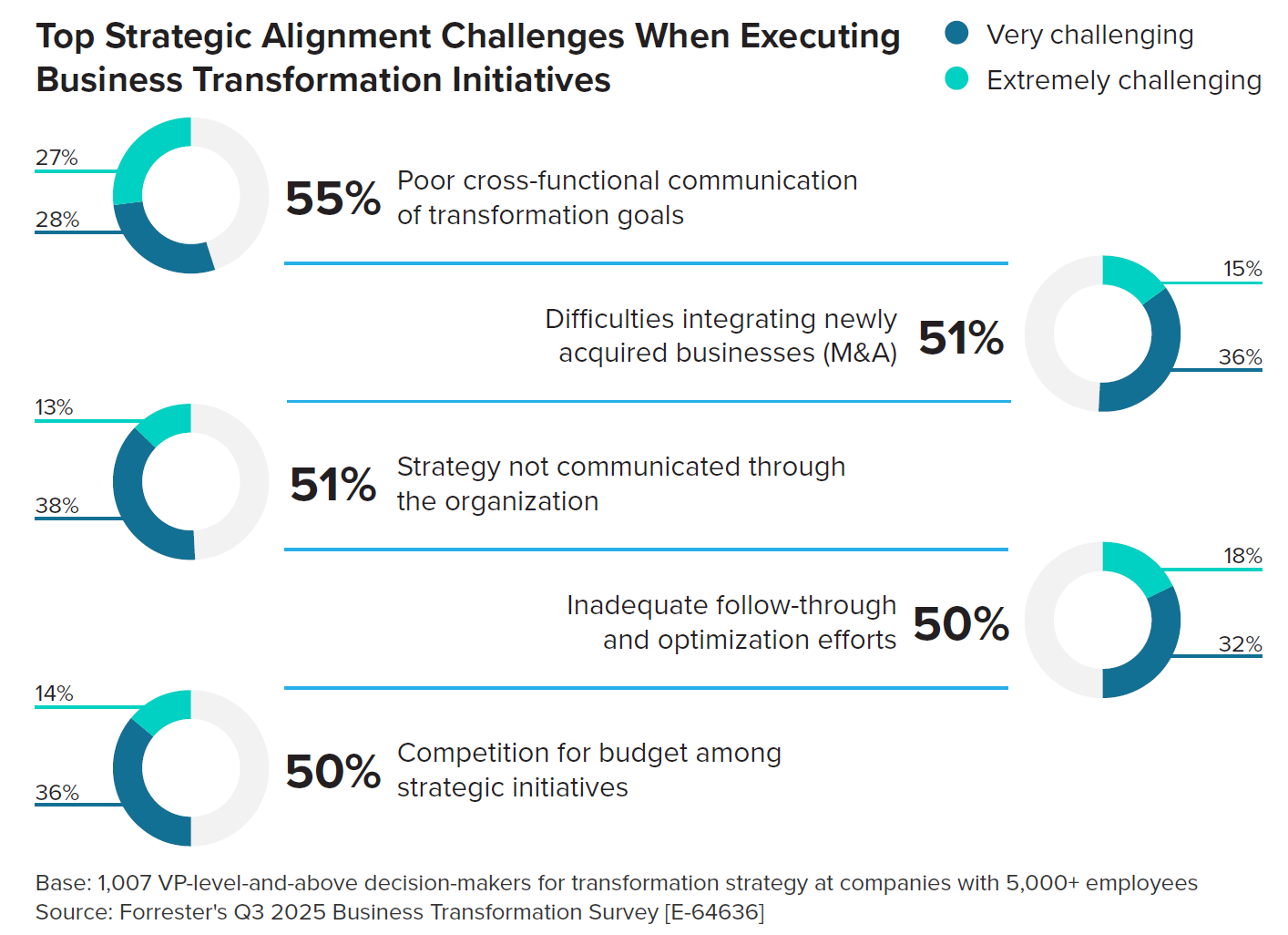
The report argues that the number one capability gap is the inability to execute transformation well inside departments while still lacking an integrated, enterprise-wide strategy. That problem shows up in several related ways. More than half of respondents, 55%, say poor cross-functional communication of transformation goals is a major challenge. Another 51% say strategy is not communicated effectively through the organization, and 50% report competition for budget among strategic initiatives. This means many firms are funding change without orchestrating it. When ownership is unclear, and teams do not share one transformation narrative, efforts become duplicated, sequencing breaks down, and the business loses the ability to scale what works across the enterprise.
Process, technology, data, and people are all under strain at the same time
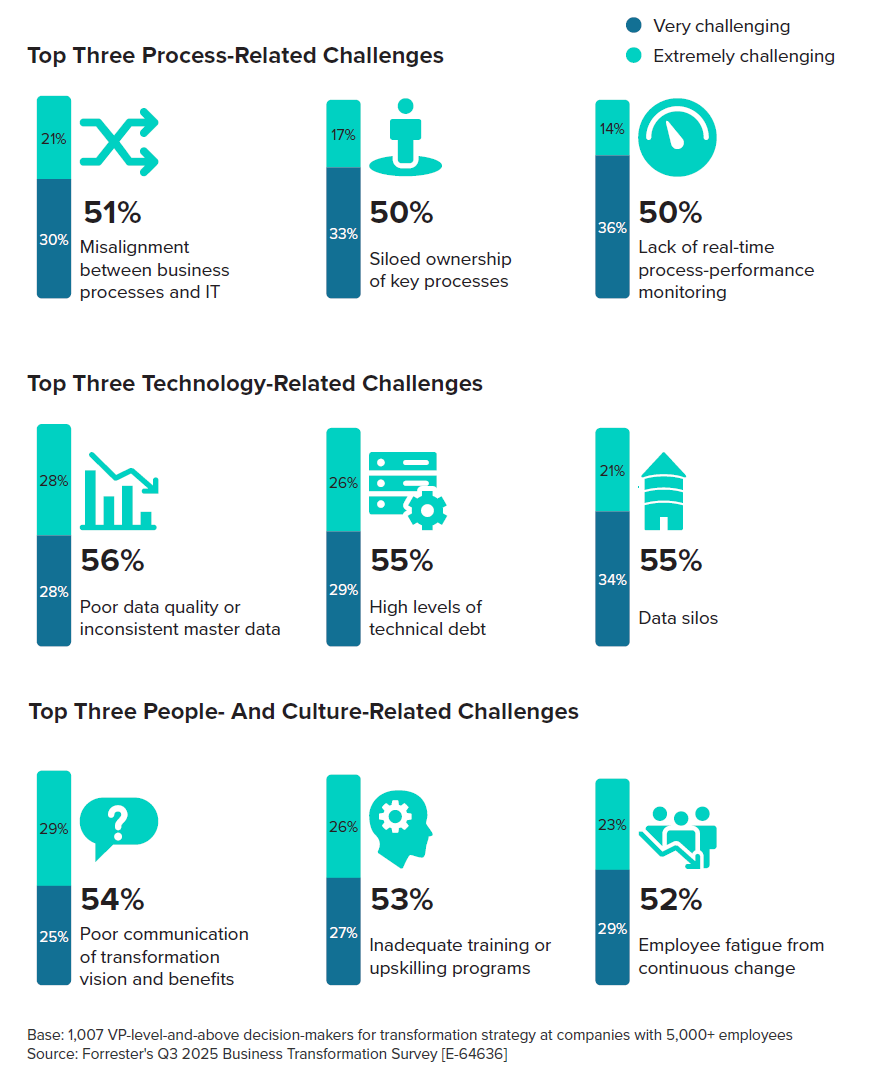
The study shows that transformation friction is not limited to one domain. On the process side, 51% of respondents cite misalignment between business processes and IT as a top challenge, while 50% mention siloed ownership of key processes, and another 50% lack real-time monitoring of process performance. On the technology side, the leading problems are poor data quality or inconsistent master data, data silos, and technical debt, each cited by more than half of respondents. But the human dimension is just as important. Poor communication of the transformation vision affects 54%, inadequate training and upskilling programs affect 53%, and employee fatigue from continuous change affects 52%. The conclusion is hard to ignore: transformation rarely fails because of one broken component. It stalls when people, processes, data, and technology are improved separately rather than as one operating model.
Data is not a support function. It is the transformation backbone
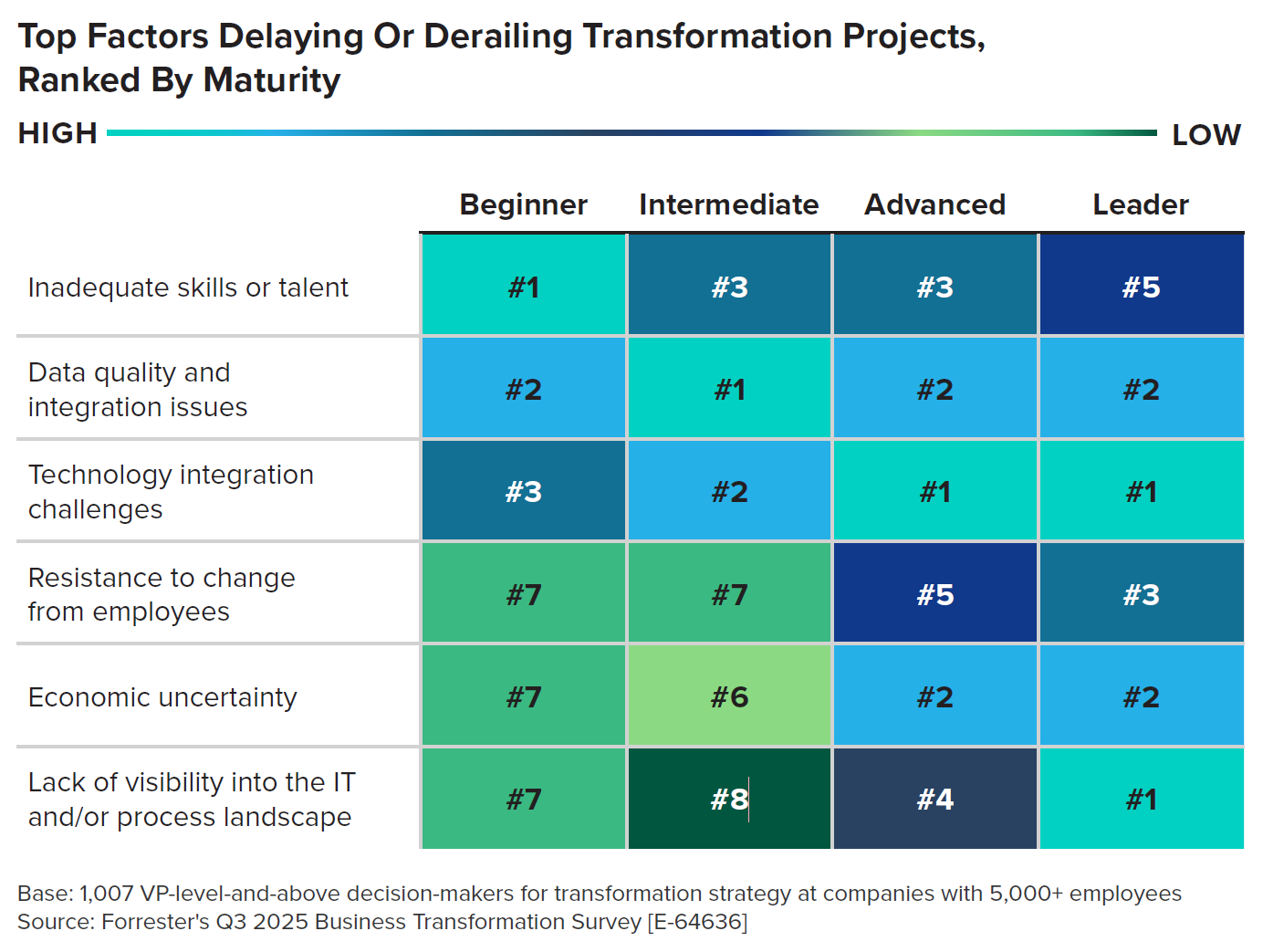
The report is especially strong on one point: data should not be treated as a secondary enabler. It is a strategic asset. Disparate data sources and analytics tools are identified as the second most common capability gap, and 56% of respondents say poor data quality or inconsistent master data is their top technology-related challenge. Data silos are almost as widespread, cited by 55% of respondents, and 39% say data quality and integration issues have been the biggest factor delaying or derailing transformation projects. Without trusted, integrated data, companies cannot make decisions with confidence, measure progress accurately, or expand the value of advanced technologies. That is why the report frames weak data governance not as a technical nuisance, but as a strategic blocker to transformation itself.
The future belongs to firms that make transformation repeatable
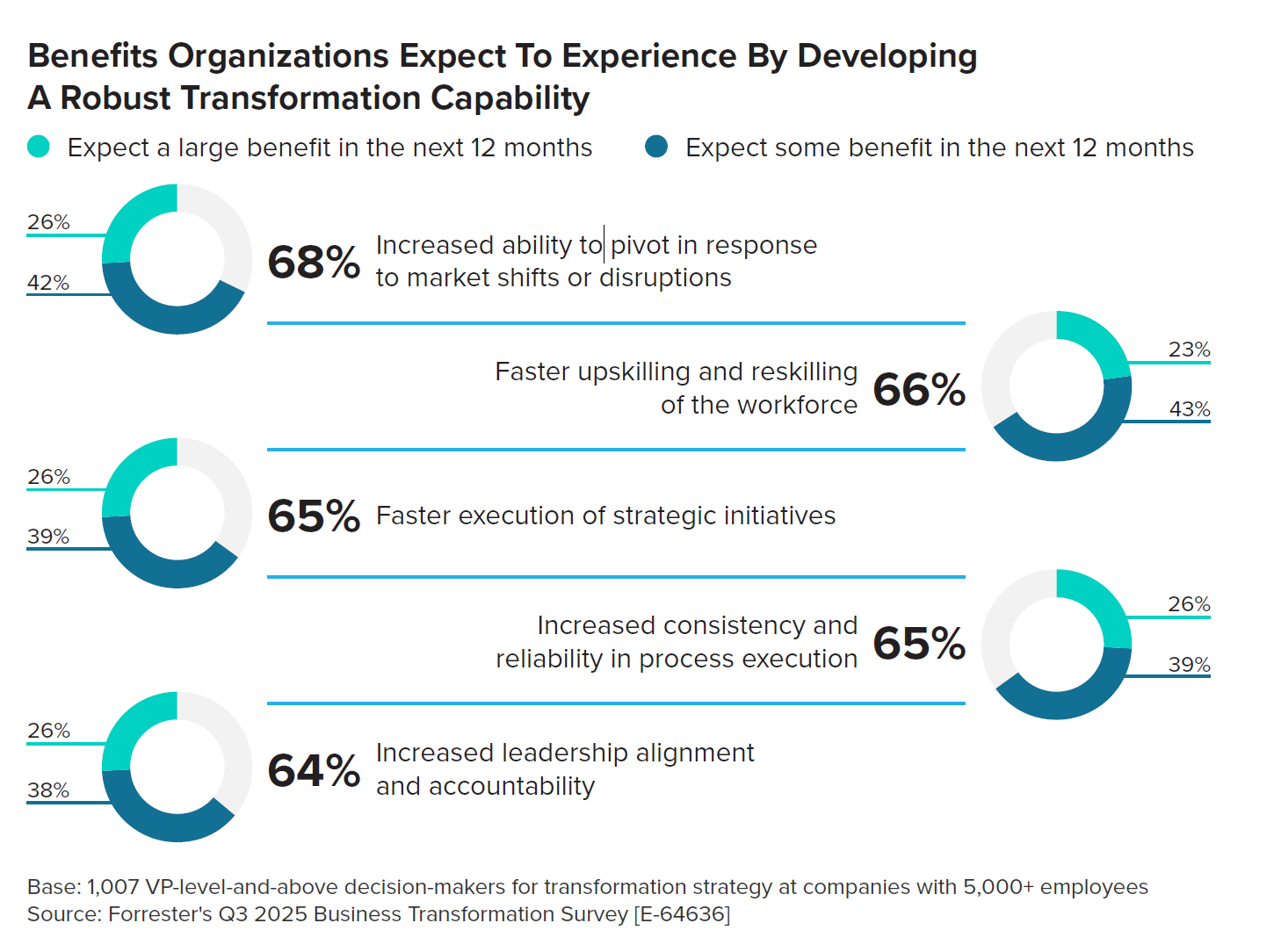
The paper’s core recommendation is to move away from isolated projects and toward a repeatable transformation capability. Respondents indicate that the primary benefits of developing this capability would be greater agility in responding to market shifts (selected by 68%), faster workforce upskilling (selected by 66%), and faster execution of strategic initiatives (selected by 65%). The same share, 65%, also expects more consistency and reliability in process execution, while 64% expects stronger leadership alignment and accountability. What good looks like changes with maturity. Early-stage firms rely heavily on data-driven decision-making and continuous process optimization, but leaders distinguish themselves by involving employees early and by building dedicated change-management functions. That is the real shift in the report: transformation stops being a collection of programs and becomes a managed system for visibility, adoption, reuse, and measurable business outcomes.
From ambition to discipline
The study closes with three practical recommendations.
Taken together, these recommendations reinforce the paper’s central idea: organizations do not need more isolated transformation projects. They need a disciplined, repeatable system that turns change into an enterprise capability.
Source: The Capability Mindset: Turning Business Transformation Into A Repeatable Discipline, Forrester Consulting thought leadership paper commissioned by SAP, January 2026.
Download the full report below.
Interested in the article and want to know more? |