AudioCodes
con4PAS has become the AudioCodes Channel Partner with the certification:
Registered VAR / Systems Integrator


con4PAS has become the AudioCodes Channel Partner with the certification:
Registered VAR / Systems Integrator

Professional services firms are growing—yet converting momentum into stronger margins remains hard. Oxford Economics research conducted with SAP among 2,100 executives (end of 2023) suggests that sales process innovation is becoming a practical necessity: to win new clients, scale delivery, and keep engagements profitable as revenue models diversify. The opportunity lies in connecting teams, data, and workflows from lead to cash, then using cloud and AI to run faster, sell smarter, and deliver consistently.
Growth is real, but profitability gains are still modest
Professional services SMEs reported more profitability growth in 2023 than any other industry in the study (77% versus a 67% survey average), but the depth of that improvement was limited. Only 25% said profitability increased by more than 5%, pointing to a gap between topline activity and margin performance. That gap is often created by slow handoffs, uneven visibility into delivery capacity, and inconsistent engagement management once a deal is signed. Sales innovation therefore has to extend beyond pipeline generation and into how work is scoped, priced, delivered, and measured end-to-end.
The next two years: win new customers, protect margins, and scale the operating model
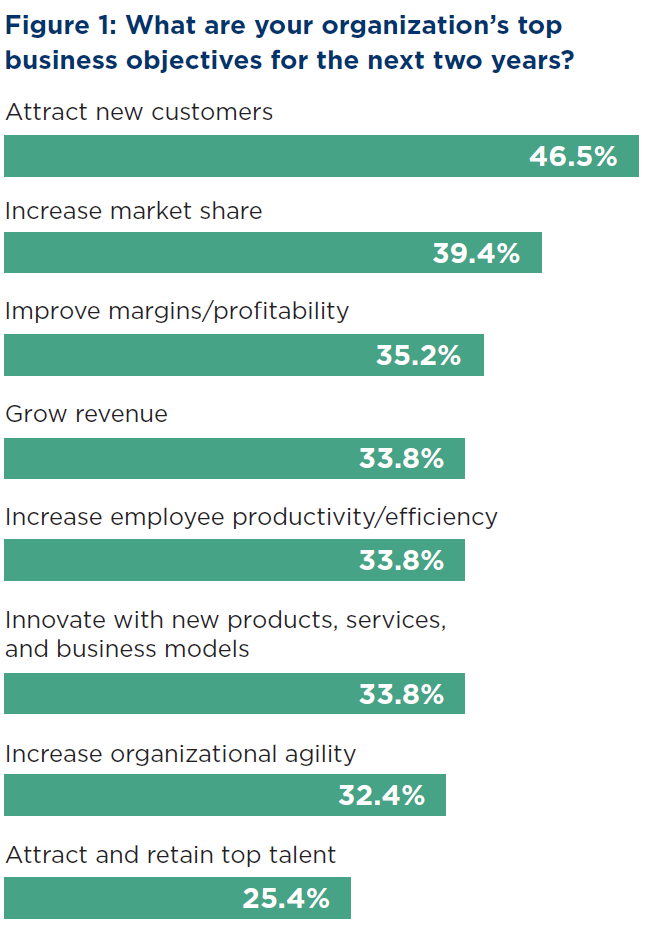
Across professional services, attracting new customers is the standout objective (46.5%), followed by improving market share (39.4%) and margins/profitability (35.2%). Revenue growth also remains a priority (33.8%), while improving productivity/efficiency (33.8%) and agility (32.4%) reflects the pressure to respond faster with fewer bottlenecks. The biggest barrier is not demand—it is scalability: 63% of sales-minded executives cite an inability to scale IT processes and systems as a major constraint, and 42% say difficulty adapting to new information and shifting priorities limits scale. Sustainable growth will depend on consistent tracking, management, and measurement of client engagements from inception through completion.
Revenue streams are getting more complex—so selling and delivery must be designed together
Professional services firms are expanding sales routes and engagement models: direct sales is now complemented by post-sale services, digital channels, and longer-term client programs. At the same time, monetization increasingly relies on mixing one-time services with subscriptions, consumption-based billing, and bundled offerings. Respondents acknowledge that limited ability to launch new ventures or deploy new business models hinders scalability (58%), yet many also see a clear path forward. Nearly half point to bundling products, subscriptions, and services as a way to better monetize new business models, while around one-third highlight the value of out-of-the-box subscription and service contract capabilities that support delivery. In practice, sales innovation becomes a joint design exercise: how offerings are packaged, priced, contracted, staffed, and governed.
Technology and data integration are the foundation—cloud is common, but AI-ready maturity is not
The sector already shows strong adoption of core platforms: ERP (76%), business networks (73%), customer data platforms (70%), and CRM (61%). But when ERP and CRM are disconnected, data becomes siloed, responses slow down, and client messaging turns inconsistent—directly hurting conversion and renewals. Cloud adoption is also widespread, with nearly three out of four professional services SMEs using cloud-based systems; the reported benefits include optimized processes (42.4%), improved customer experience (35.6%), improved agility (35.6%), improved employee experience (32.2%), and higher automation (32.2%). Yet digital transformation often stops short of AI leverage: only 19% report substantial digital enablement and just 14% say AI potential has been achieved. Closing that gap requires consistent, integrated data from lead to cash—something firms say helps drive innovation (76% at least to a moderate extent), enables more personalized solutions (70%), and keeps data accurate and up to date (74%).

AI is the next accelerator for sales innovation—especially in project-based work
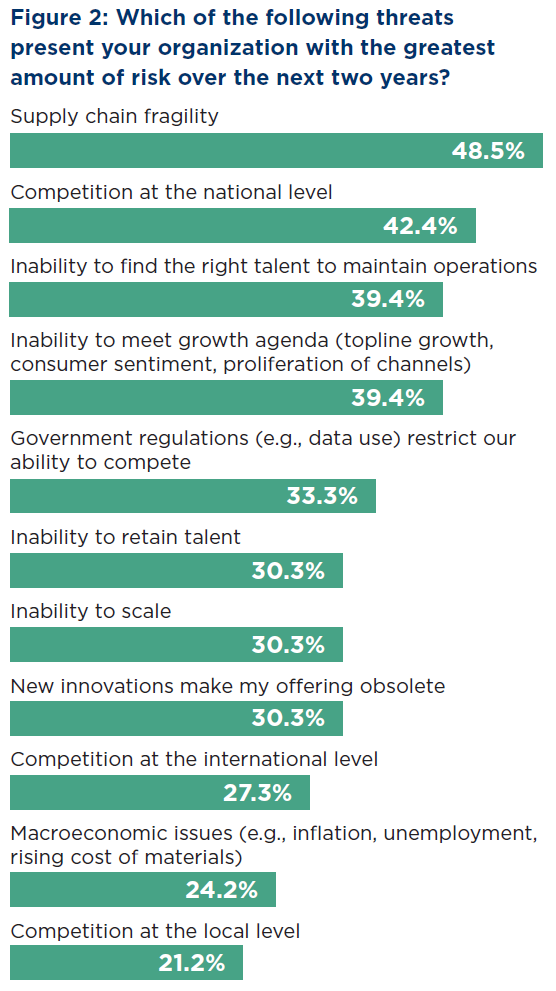
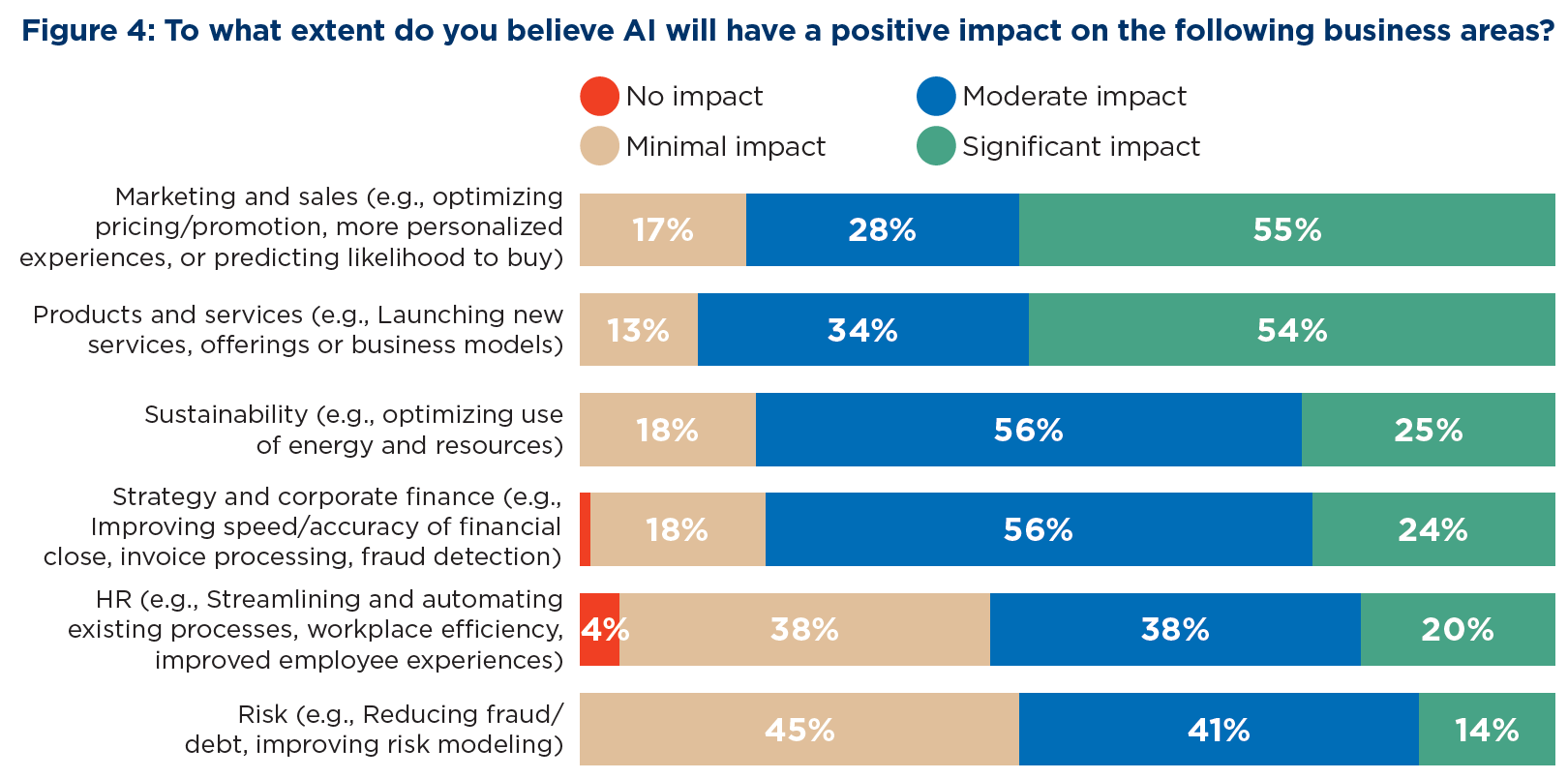
Professional services firms are acutely aware of competitive pressure and the risk that innovation makes today’s offerings obsolete; over half of sales-minded executives identify obsolescence due to innovation as the most significant threat. AI adoption is still early (27% report current usage), but expectations are high: 55% predict a significant impact on sales innovation and 83% anticipate at least a moderate impact. AI’s influence is also expected to reshape the services themselves—54% foresee a substantial impact, and 88% expect at least moderate effects on products and services. Practically, AI can support ‘next best action’ recommendations, improve lead qualification, generate negotiation-ready sales scripts, and help tailor engagement journeys on a scale. When paired with integrated delivery and financial data, it can also improve how projects are scoped and priced, increasing the likelihood that growth translates into margin.
A practical roadmap: how to scale sales and delivery together
AI should be treated as a disciplined investment, not a collection of experiments. In professional services, the strongest returns come when AI is connected to the commercial engine—how opportunities are qualified, how proposals are built, and how delivery and finance data are used to manage scope, risk, and margin in real time. That means clear ownership, a baseline for cycle time and profitability, and KPIs that show whether selling and delivery are improving together. With that governance in place, automation and AI can scale repeatable work while protecting client experience and engagement economics.
To translate those principles into action, three practical steps should be considered:
Source: Smart Growth, Seamless Delivery: How service innovation and sales transformation are redefining success for professional services firms
Download the full report below.
Interested in the article and want to know more? |