AudioCodes
con4PAS has become the AudioCodes Channel Partner with the certification:
Registered VAR / Systems Integrator


con4PAS has become the AudioCodes Channel Partner with the certification:
Registered VAR / Systems Integrator

Midsized industrial product manufacturers are addressing sales transformation as a direct driver of growth – especially as market share wars heat up and new business models such as digital subscriptions and XaaS emerge as viable paths to differentiation. Research by Oxford Economics, in partnership with SAP, among 2,100 executives indicates that the key to success will be found by those who can integrate customer acquisition with service, real-time visibility, and automation from lead to cash. The opportunity is not only to sell more, but to sell smarter.
Growth priorities are shifting towards market share and new business models
The industrial manufacturing sector is entering in the next two years with a defined growth agenda. Although revenue growth and customer acquisition are important to many companies, the greatest emphasis is on market share growth and innovation through new business models such as digital subscription and “everything as a service” (XaaS). At the same time, the sector is also focusing on agility and market growth, and improving customer experience is seen as a building block for success by many companies. This indicates a shift in the role of sales, from simply closing deals to also helping to shape value propositions, grow recurring revenue, and maintain consistency in customer experiences as companies grow.

The greatest risks: talent gaps, material constraints, and IT scalability
Ambition is high, but so are the constraints. Difficulty in finding the right talent to keep the business running is a significant risk that directly impacts the sales organization’s ability to adapt and scale. Issues with material substitution can also impact on the consistency and reliability of the offerings being presented to customers, while the availability of cheaper, lower-quality imports heightens the need to articulate differentiated value. The potential for innovation to make current offers obsolete is another dimension of the urgency: sales teams need to be constantly informed to position the latest innovation effectively. Behind many of these challenges lies a structural problem: IT infrastructure gaps. The majority of the stakeholders in business, operations, IT, and sales struggle to scale processes and systems to keep pace with organic growth, and issues with order fulfillment and customer dissatisfaction are becoming increasingly common.
Services are becoming a profitability engine - so sales and service must run as one
The use of services to drive additional margin growth and stabilize revenue is becoming more prevalent, which shifts the sales playbook. Some of the most prominent service efforts include enhancing profitability after the sale through billing, revenue, and financial close, which emphasizes the importance of commercial outcomes being tied to activities that occur after the sale has been made. A significant number of companies are also focused on expanding their reach and improving service delivery in order to ensure that engagement with customers remains timely and productive. This means that sales innovation has to be built with service delivery in mind.
ERPs First, Cloud-Enabled, and Customer Data aware build the data and tech
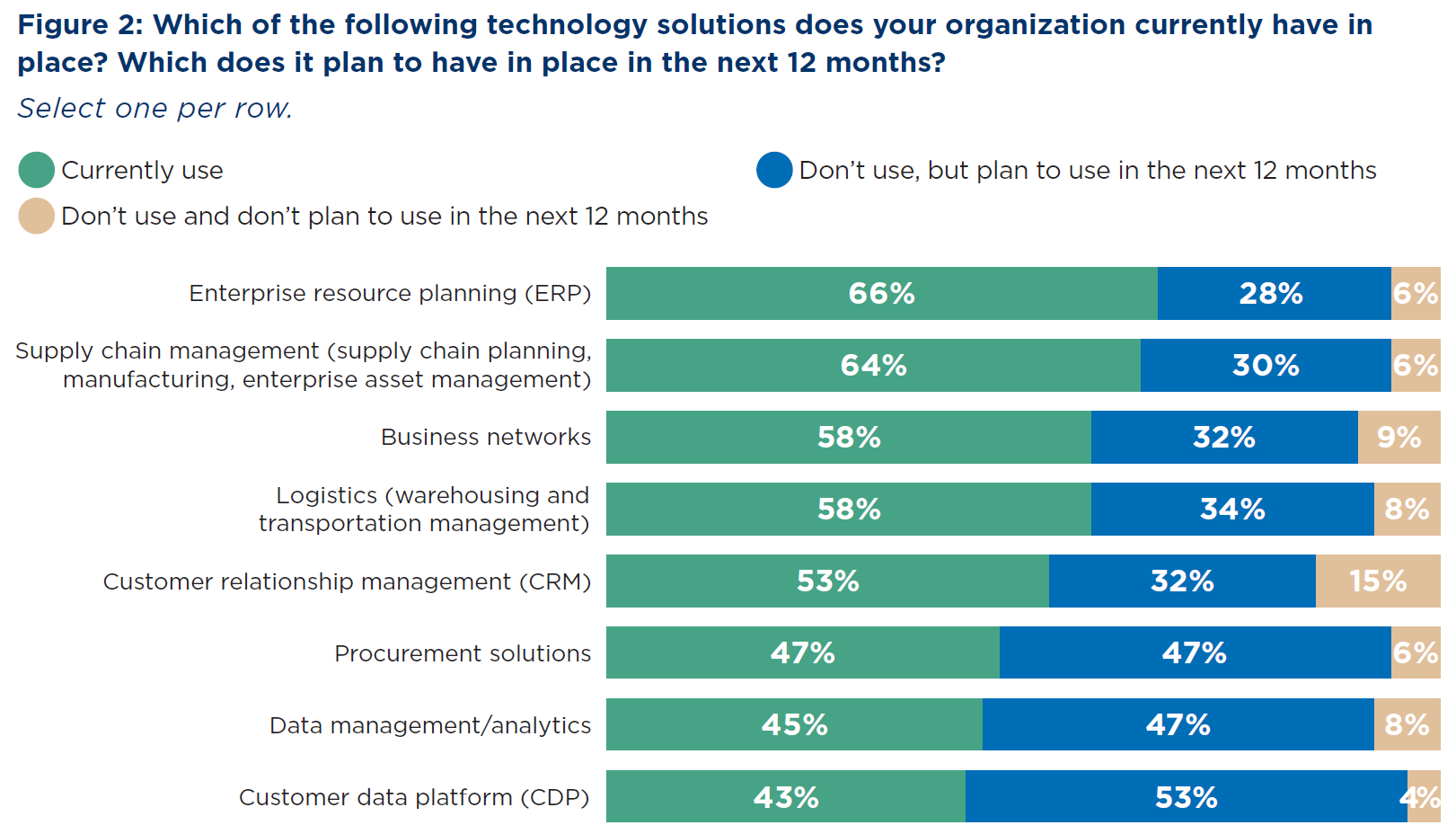
Technology adoption is a key enabler of sales process innovation in manufacturing. ERP is a foundation layer for almost all companies, which speaks to its importance in managing complex business processes and moving goods through the value chain. Cloud-based sales force automation and ERP can automate many manual processes and enable sales teams to focus on customer engagement and closing deals; cost savings and process improvements are also credited to cloud adoption by manufacturers. Customer Data Platforms (CDPs) are also gaining traction, enabling better understanding of customer behaviors and realities of the installed base, which speaks to improved decision-making and personalized engagement. Data management and analytics tools are also being used or planned, which improves forecasting and strategic planning. The thread that runs through all of these is integration: when processes and data are linked together through the lead-to-cash process, automation and personalization become possible at scale, and channel visibility and financial visibility improve.
The next wave of AI-powered selling is around guided selling, configuration, and shorter commercial cycles
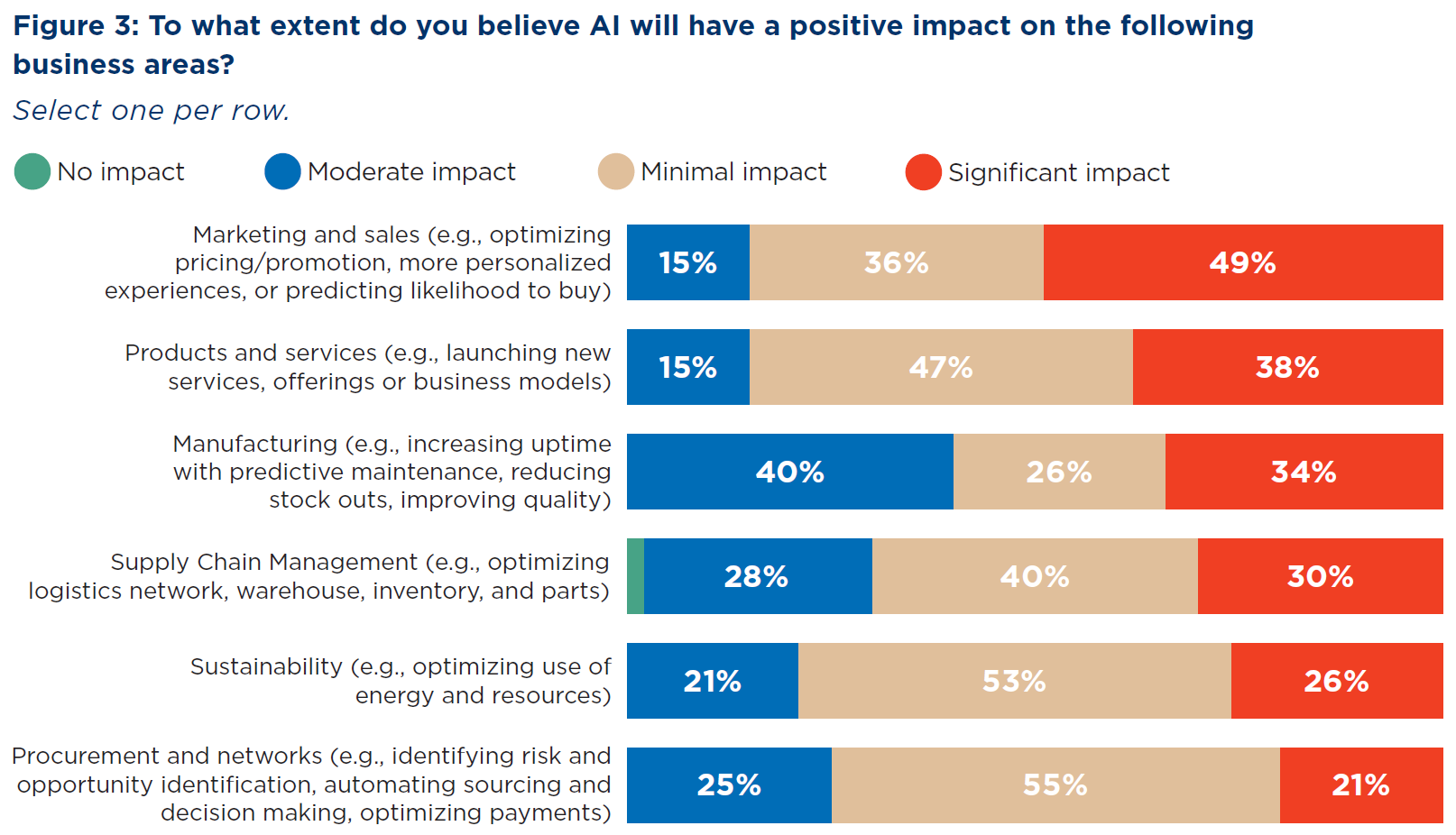
Industrial manufacturers look to AI to transform sales work into very tangible and impactful ways. Marketing and sales are expected to be the biggest beneficiaries of AI, particularly in scenarios where complex configurations and customization result in friction in the buying process. AI can help with guided selling for configurable products, assisted outreach, and enhanced pipeline and forecast management. But infrastructure limitations are still a perennial issue, as disconnected systems hinder customer engagement and scaling. High manual and low-value work, and inability to react to market changes, highlight the limitations of legacy environments. AI has the greatest potential when it is fueled by integrated and insight-driven data, such that suggestions, configurations, and customer engagement are informed by real-time operational and market realities.
A practical roadmap: from digital foundations to repeatable growth
Industrial manufacturing sales transformation is most effective as a phased approach: first, building digital foundations, and then scaling automation and AI where they can remove friction. Often, the quick wins for many companies are in integrating lead-to-cash processes, minimizing the number of manual steps in quoting, ordering, and forecasting, and enhancing fulfillment visibility to preserve customer experience. After the digital foundations are integrated, AI can help teams respond faster, configure offers faster, and personalize experiences without losing consistency.
To translate these themes into action, three practical steps should be considered:
Source: The Digital Drive to Growth: Transforming sales into a strategic growth lever for industrial manufacturers
Download the full report below.
Interested in the article and want to know more? |