AudioCodes
con4PAS has become the AudioCodes Channel Partner with the certification:
Registered VAR / Systems Integrator


con4PAS has become the AudioCodes Channel Partner with the certification:
Registered VAR / Systems Integrator

Category management is no longer a back-office exercise focused on squeezing suppliers. In a volatile supply environment, it is becoming a strategic capability for risk mitigation, resilience, and value creation. Economist Impact research highlights three recurring mistakes that keep procurement teams from realizing this potential - and practical ways to correct them.
1) Treating category management as administration, not strategy
Many organizations still equate category management with sourcing - an activity centered on running RFPs, negotiating, and capturing short-term savings. That mindset limits impact because it disconnects category decisions from business goals such as continuity of supply, sustainability, or growth.
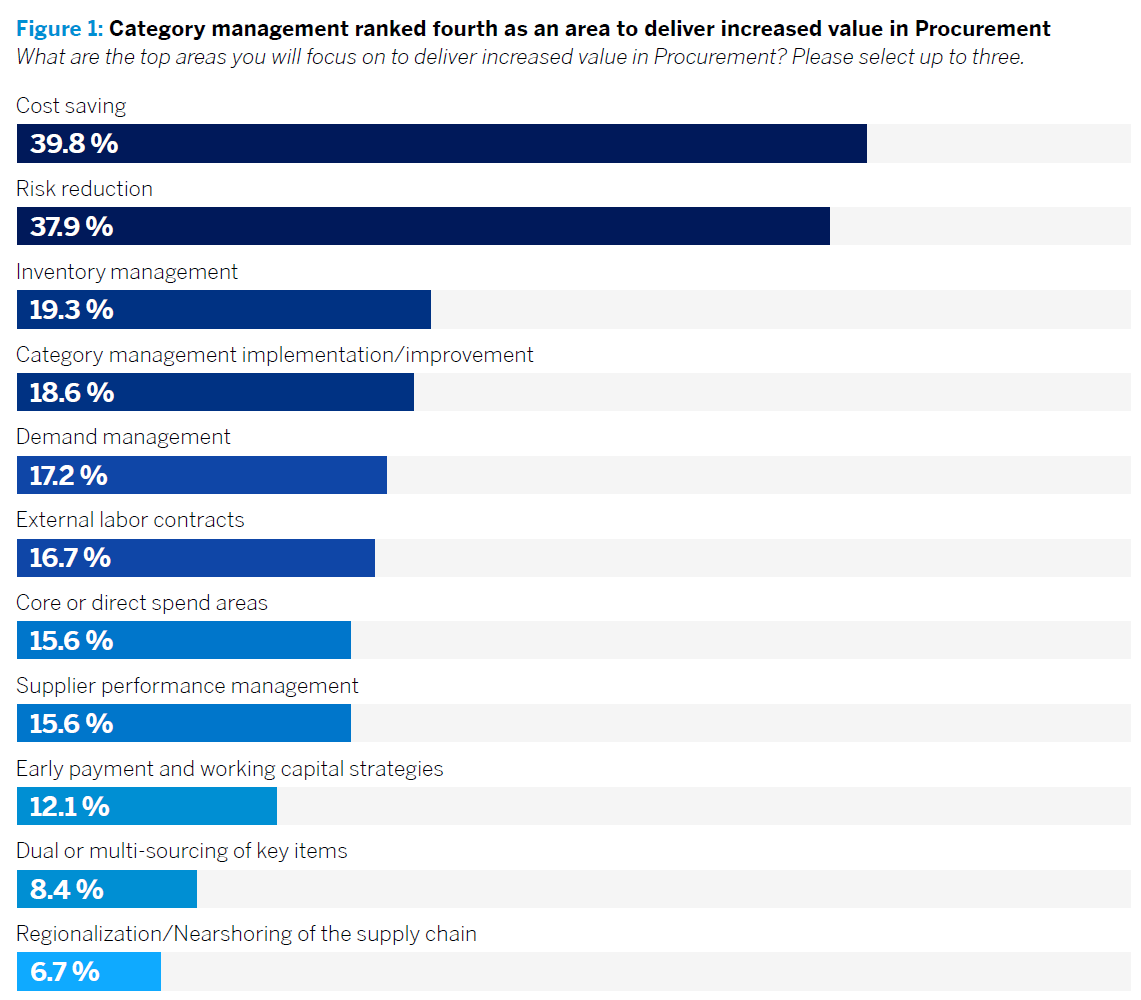
The research suggests category management is already viewed as a major lever for value: in a survey of 430 C-suite executives, category management implementation/improvement ranked fourth among focus areas for delivering increased procurement value (18.6%), behind cost savings (39.8%) and risk reduction (37.9%).
Fix: separate category management from sourcing while keeping them tightly linked. Category management should set the long-term direction: segmentation, demand shaping, supply market strategy, risk posture, and value levers. Sourcing then executes the route-to-market that best fits the category strategy.
What it looks like in practice: category managers work cross-functionally (finance, operations, engineering, quality, sustainability) and build collaborative supplier relationships to identify opportunities and risks early - not only to negotiate price.
2) Underinvesting in digitalization for category management
When category teams rely on manual data collection and spreadsheet-driven analysis, they spend too much time building a picture of spend and too little time using it to steer decisions. Digital tools matter because they enable consistent data, better analytics, faster scenario planning, and smoother internal collaboration.
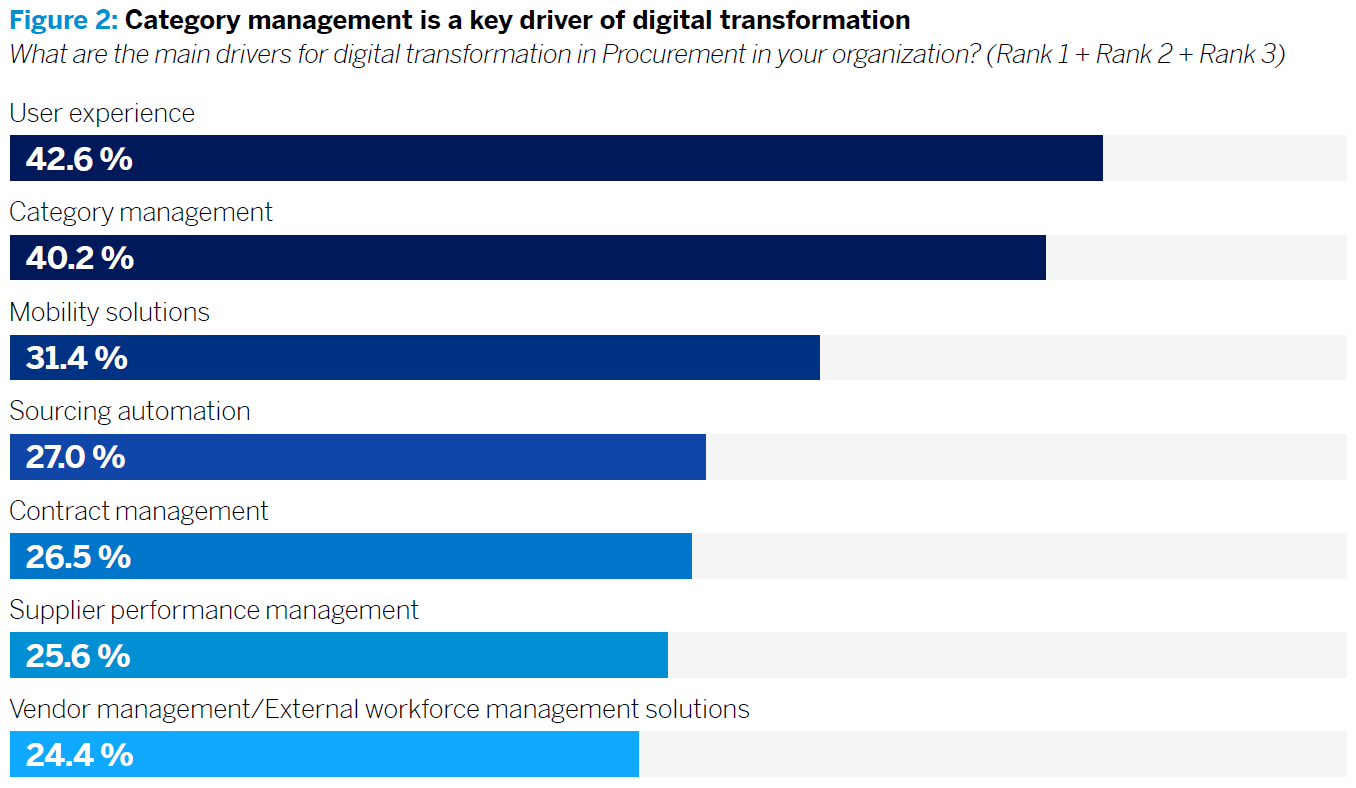
In the research, category management was cited by 40.2% of executives as a top driver of procurement digital transformation (ranked just behind user experience at 42.6% and ahead of mobility solutions at 31.4%).
Fix: treat category management as a digital use case rather than a spreadsheet process. Priorities typically include clean spend classification, unified supplier and contract data, analytics for forecasting and risk signals, and workflow-enabled collaboration on category strategies. Digitalization works best when paired with an integrated governance model, ensuring category strategies are executed, tracked, and improved over time.
A simple litmus test: if your best category insights depend on a few individuals who know where the data lives, you do not have a category management system - you have institutional memory.
3) Not upskilling the people who run categories
The common thread behind most improvements is talent. As category management expands into risk, resilience, and sustainability, the skill profile shifts: category leaders need business acumen, stakeholder influence, market understanding, analytical capability, and supplier relationship skills.
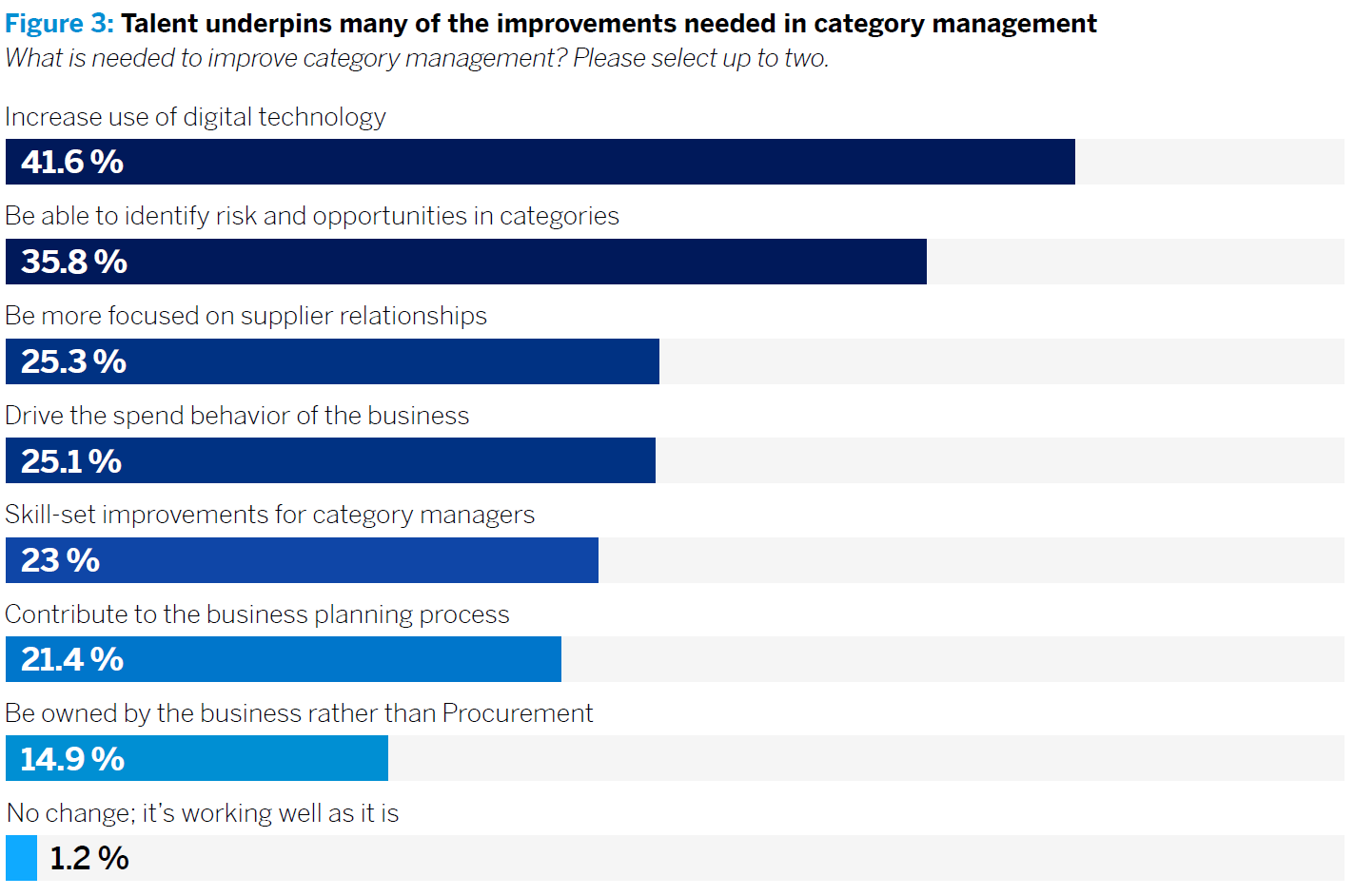
Executives identified gaps in technology skills (40%), category knowledge (37%), and risk management (31%) - a clear signal that the required capabilities are broadening. When asked what is needed to improve category management, the most selected answer was increasing use of digital technology (41.6%), followed by the ability to identify risk and opportunities in categories (35.8%).
Fix: build a deliberate capability program for category teams. The research points to a practical checklist of what strong category managers must be able to do:
A practical reset: questions to pressure-test your approach
Use these questions to quickly assess where your category management capability is strongest - and where it is fragile:
Conclusion: move from quick wins to a durable value engine
Category management pays off when it is treated as a long-term business capability: strategy-led, digital-enabled, and talent-backed. The three mistakes above are common because they reflect how procurement used to operate. Correcting them is less about a single tool or initiative and more about changing the operating model - from transactional sourcing to enterprise value management.
Source: Three mistakes Procurement makes in category management
Download the full report below.
Interested in the article and want to know more? |